TL;DR
WHY
To improve the quality of patient care, leading to increased HCAHPS scores and patient satisfaction
WHAT
iRound, Press Ganey’s web-based application
HOW
Overhaul UI design + integrate company branding, conduct extensive primary research, strategize and sell client on direction
Project Overview
Collaboratively with our client, Press Ganey, after several iterations, we landed on our north star for the project:
Through best-in-class user experience, iRound needs to be positioned to enable providers to establish a culture of rounding. Doing so will increase the flow of high-quality data into the system, increasing iRound’s value by increasing the ability to produce real- time patient insights.
Through this north star, our team identified two key objectives to tackle based on our research, project needs, stakeholder values, and project timeline.
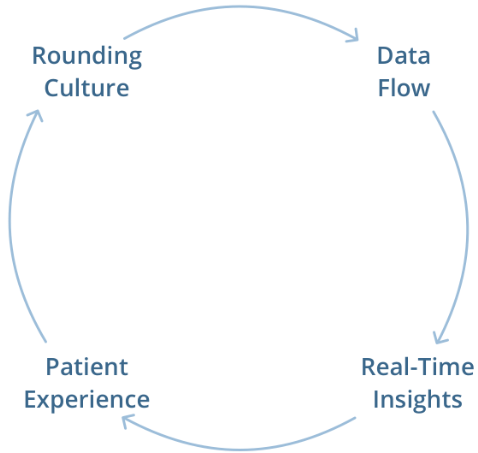
1) Incentivize usage during rounds in a way that enhances human connection, improves patient experiences, and ensures high-quality data.
2) Enable Patient Experience Managers [persona explained later] to act on real-time data and leading indicators to improve patient experience and health outcomes.
2) Enable Patient Experience Managers [persona explained later] to act on real-time data and leading indicators to improve patient experience and health outcomes.
The project initially began with Scrum Master, Solution Architect, Sr. Product Strategist, and UX Designer. After several initial meetings with our client, we identified two project tracks—modernization of the existing tool and feature exploration & experience updates. As the project needs grew, we additional team members rounding out UXR and Product for this engagement. My role on the project solidified as working on the modernization track of the existing iRound application. To that end, I worked closely with the UX Researchers to construct interview and usability test questions and heuristics, while leveraging both the product strategy and solution development sides of the project to ensure the technical feasibility of any given changes.
Research
Working closely with the UX Researchers on the team and leveraging the stakeholders and users Press Ganey could put us in contact with, we collectively completed 17 stakeholder interviews (of which I conducted 2 and participated in 12), one on-site contextual inquiry with 5 participants, and 12 user interviews (of which I participated in 8), for a total of 34 research participants. The research schedule and access were greatly influenced by the time of year (the winter holidays and New Years affecting the availability of participants), and those having available time in the demanding work culture of healthcare.
To see the full body of research we conducted, please press the button below.
To see the full body of research we conducted, please press the button below.
Jobs to be done + Actor Profiles
Because the scale of use and niche of specific tasks performed by different users at different hospitals, we decided to break the research and user persona groups into actor profiles with corresponding jobs or actions to take while interacting with patients, other hospital staff, and importantly, the iRound application itself.
After a few rounds of research and a innovation session with the client, we determined these four main actor profiles to divide the customer journey.
After a few rounds of research and a innovation session with the client, we determined these four main actor profiles to divide the customer journey.
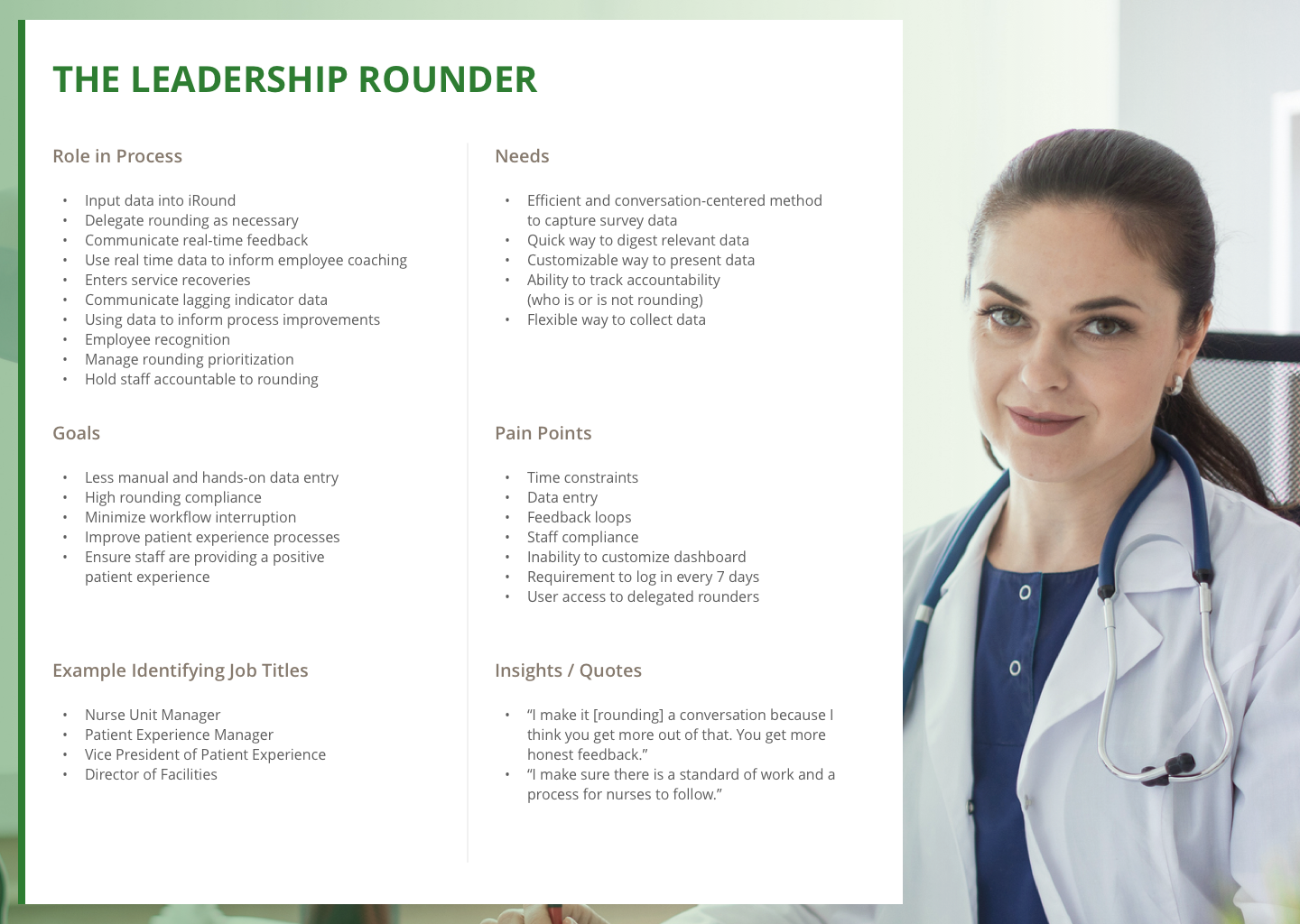
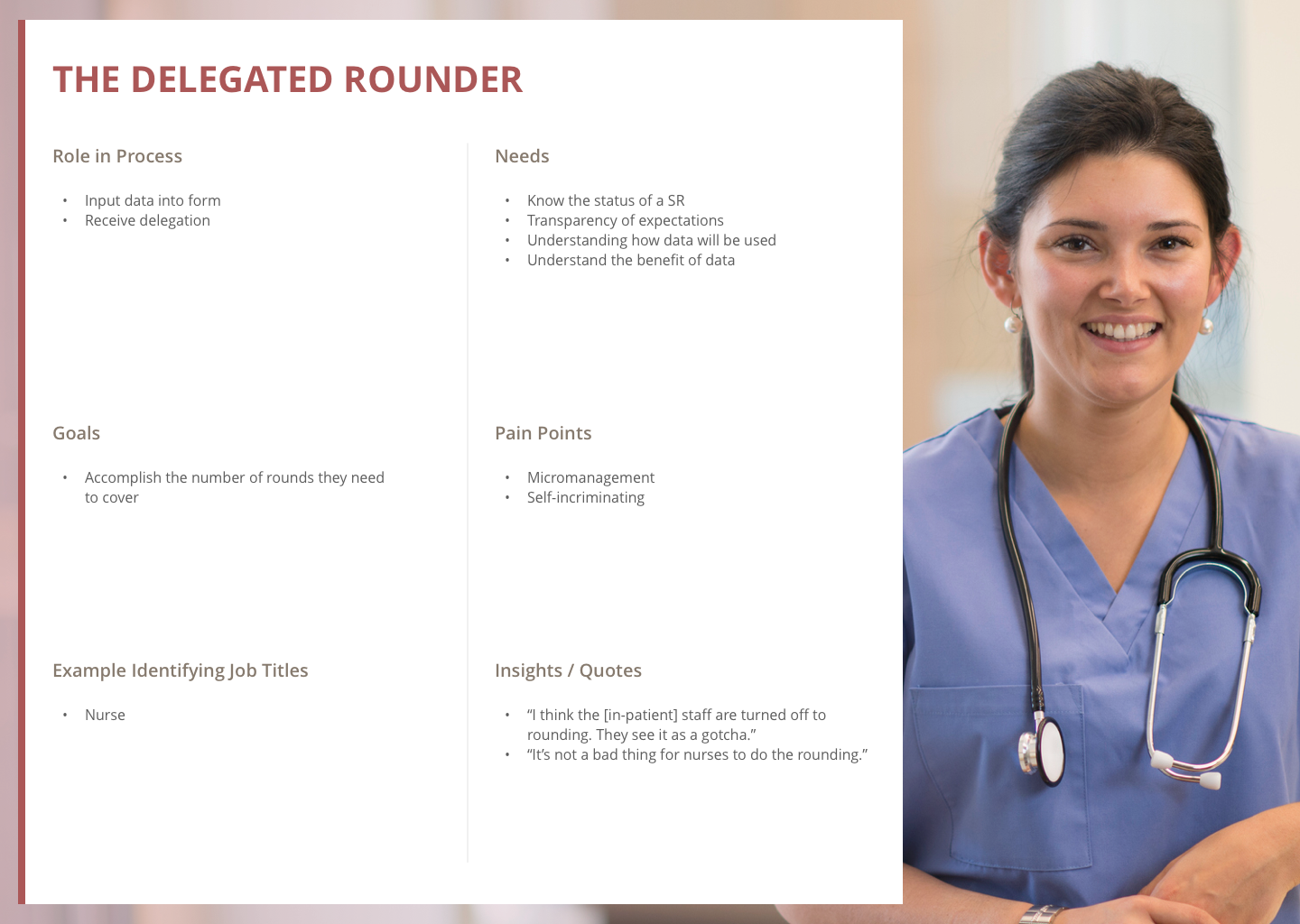
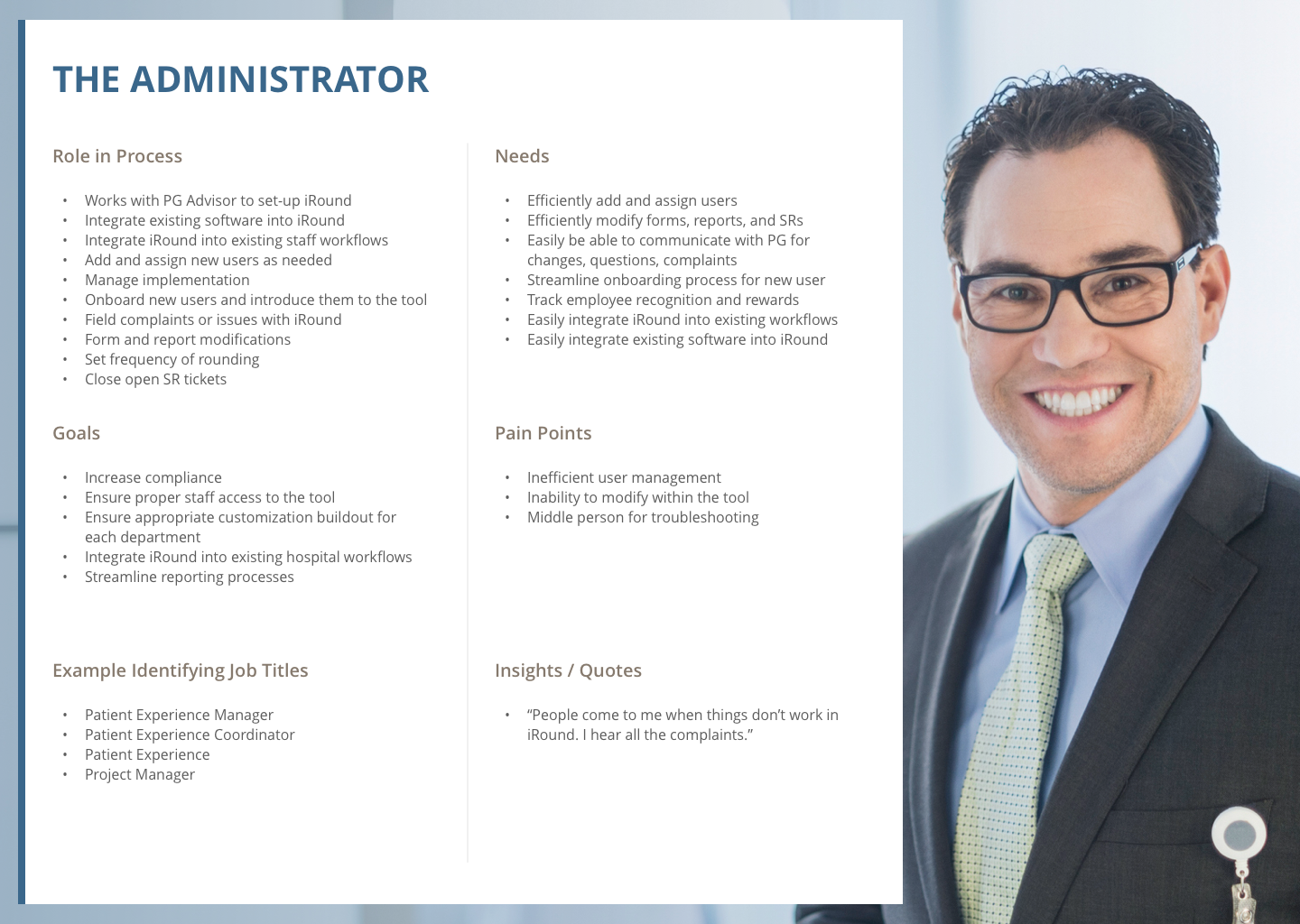
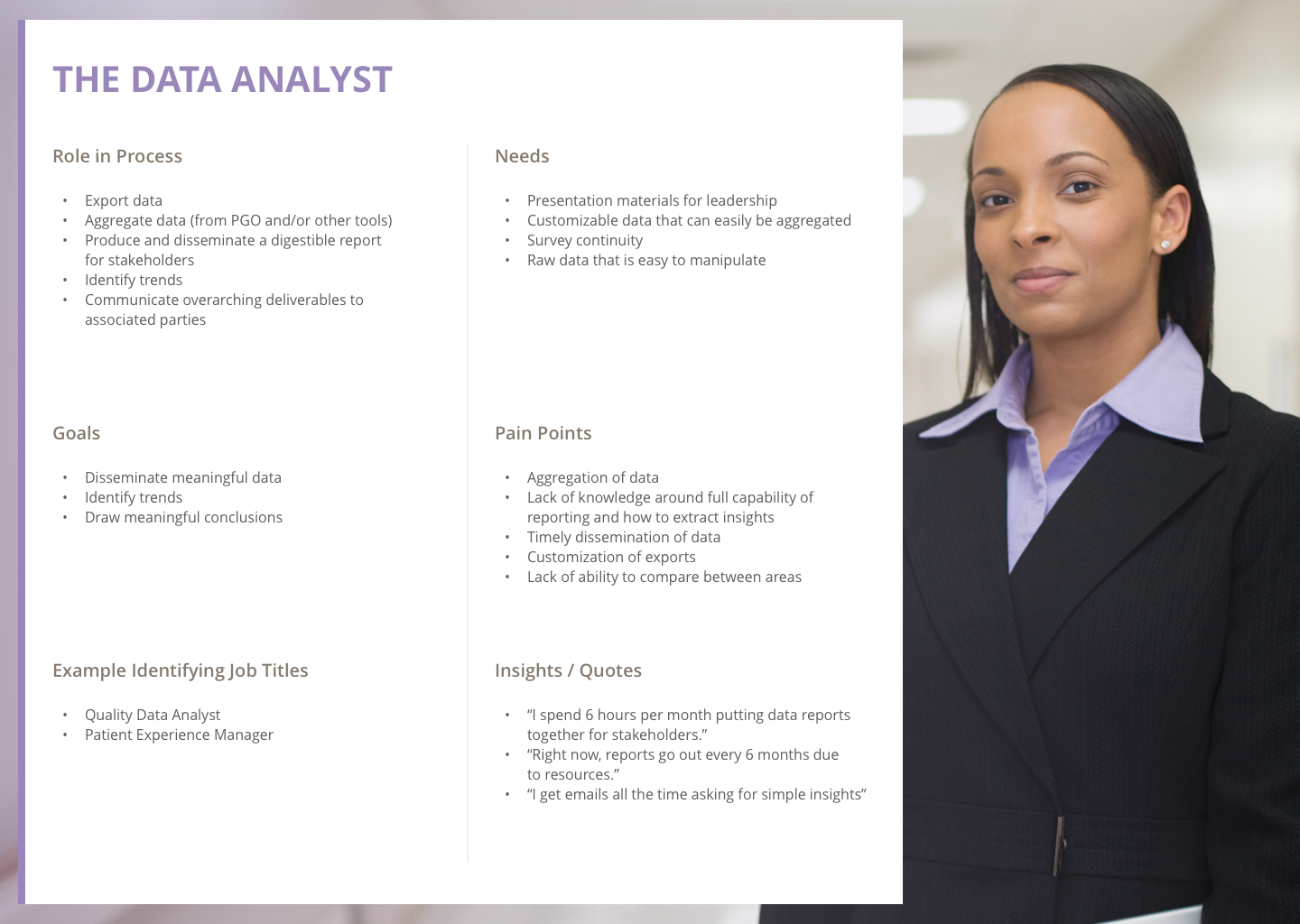
The modernization efforts which I designed mostly focused on the Leadership Rounder and Delegated Rounder actor profiles. The Administrator and Data Analyst actor profiles were prioritized second based on business need, access to interview subjects, timeline constraints, and design judgement based on immediate benefit with minimal technical changes.
UI Audit
In an effort to understand all of the updates needed to the current design system, I performed a manual UI audit of iRound, consolidating the results to share out with external stakeholders. This audit showed the large number of inconsistencies in the existing platform's design and also tried to show scale-of-effort of modernizing the UI.
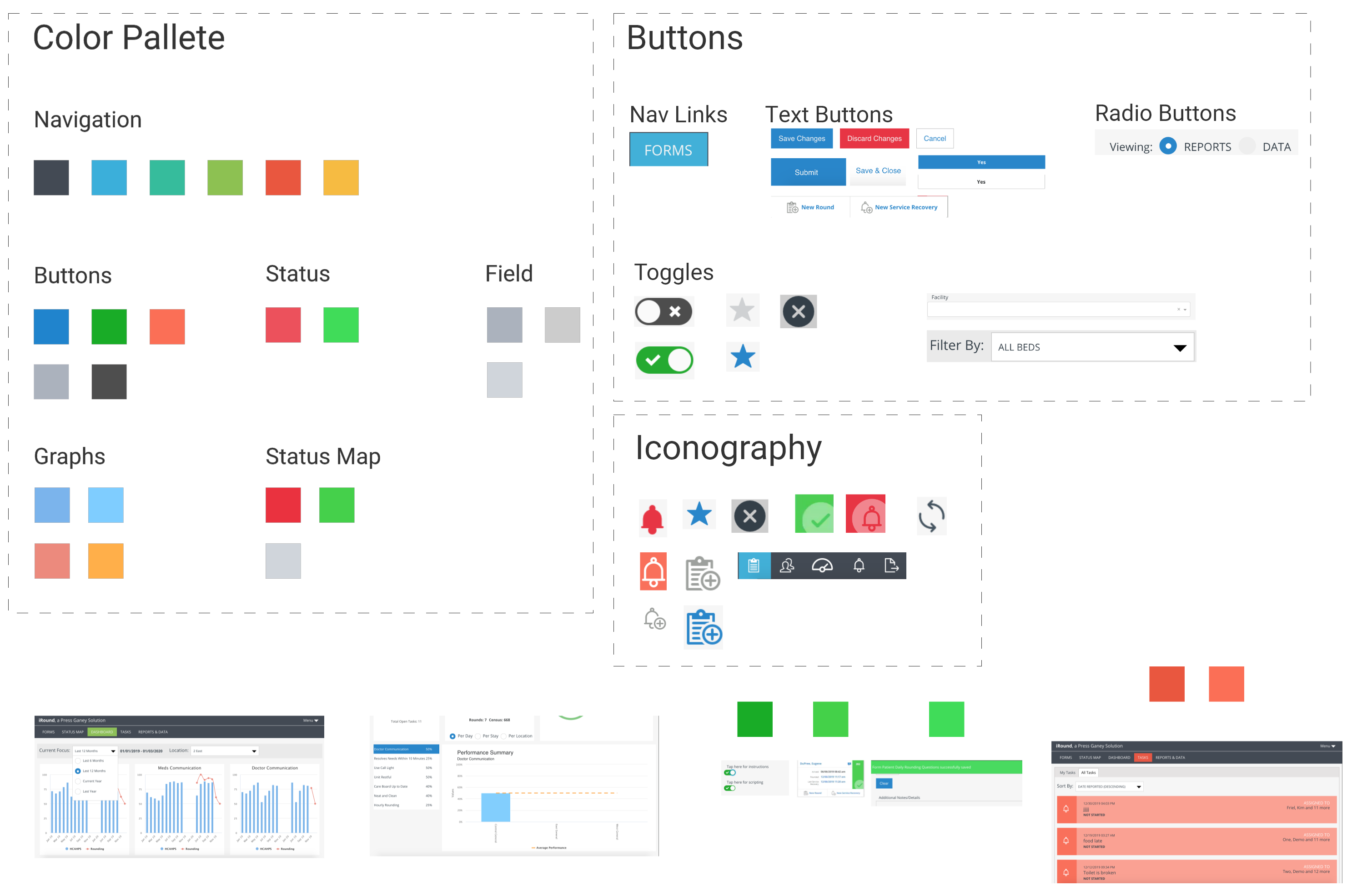
Proposed Design
Based on immediate need, stakeholder interviews, and pain points identified through research, we worked to modernize the iRound application. Additionally, within the previous year, Press Ganey updated their other suite of products to a unified style guide. This acquired product of iRound had yet to be customized to match the rest of the suite of products. Toward that end, I broke the application down screen-by-screen to visually update each interaction and flow within the iRound application.
Rounding Forms
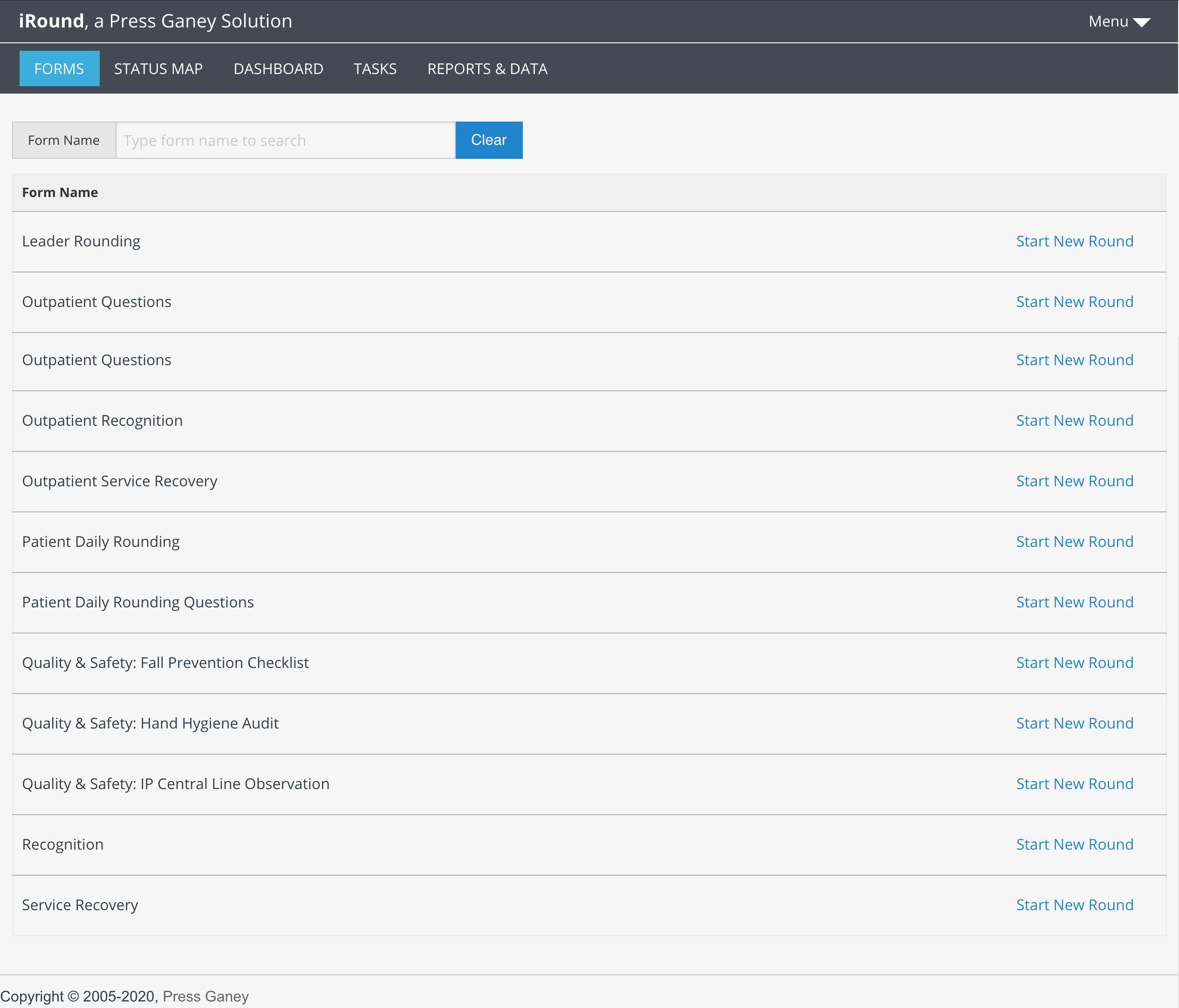
The landing screen of iRound, allowing for the selection of multiple types of round forms.
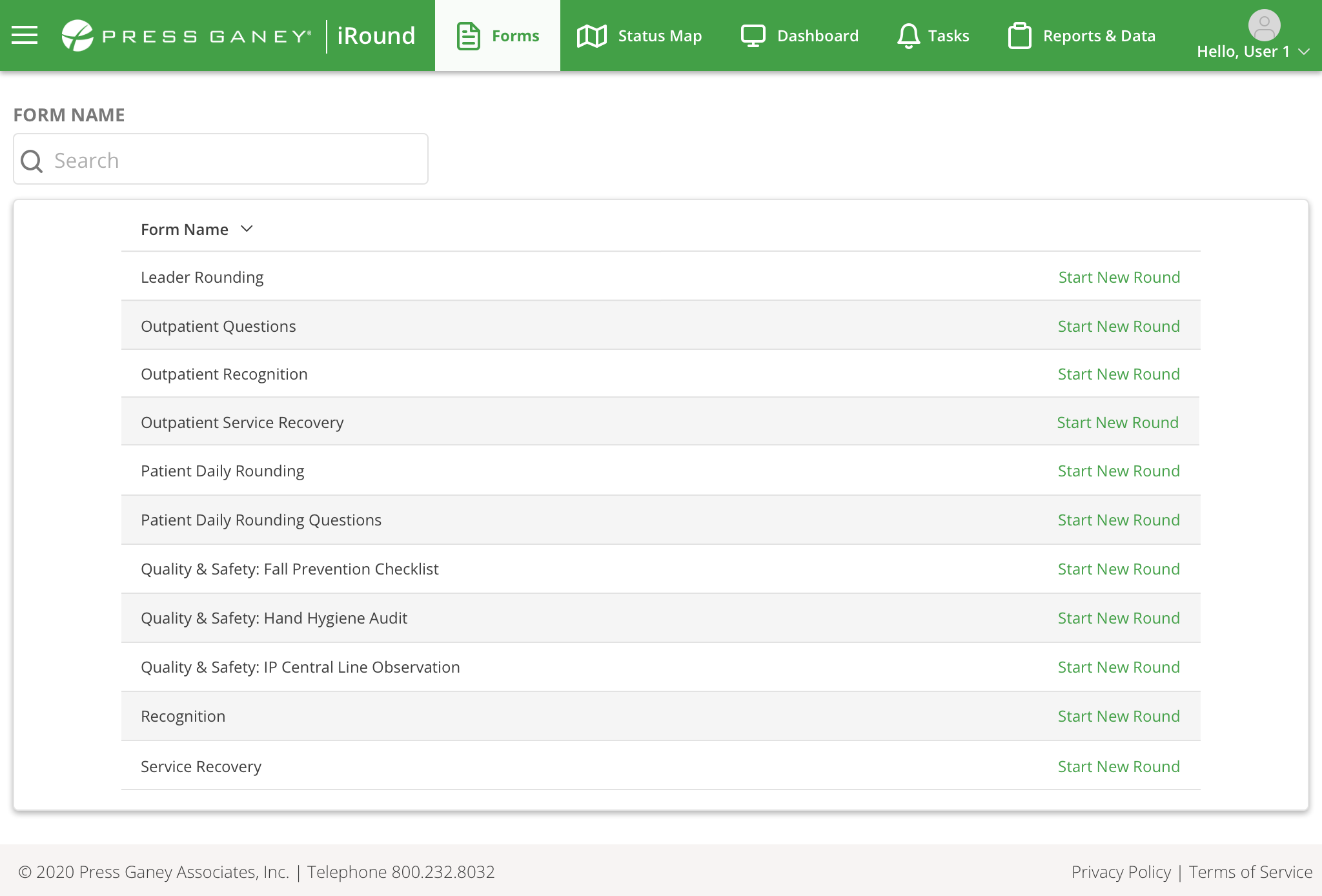
Condensed spacing, updated UI design patterns, updated top navigation bar
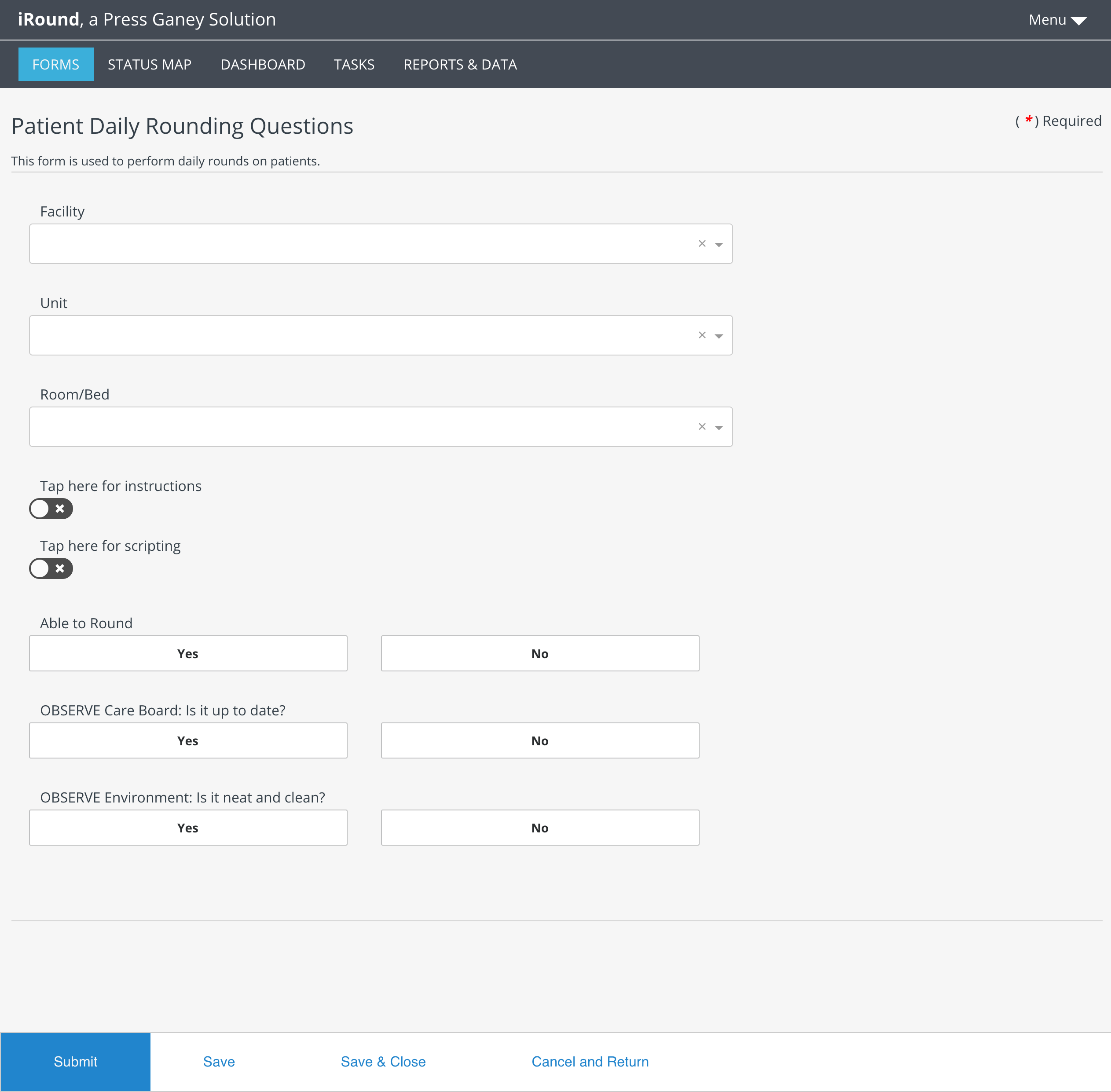
Unselected state of the default rounding form
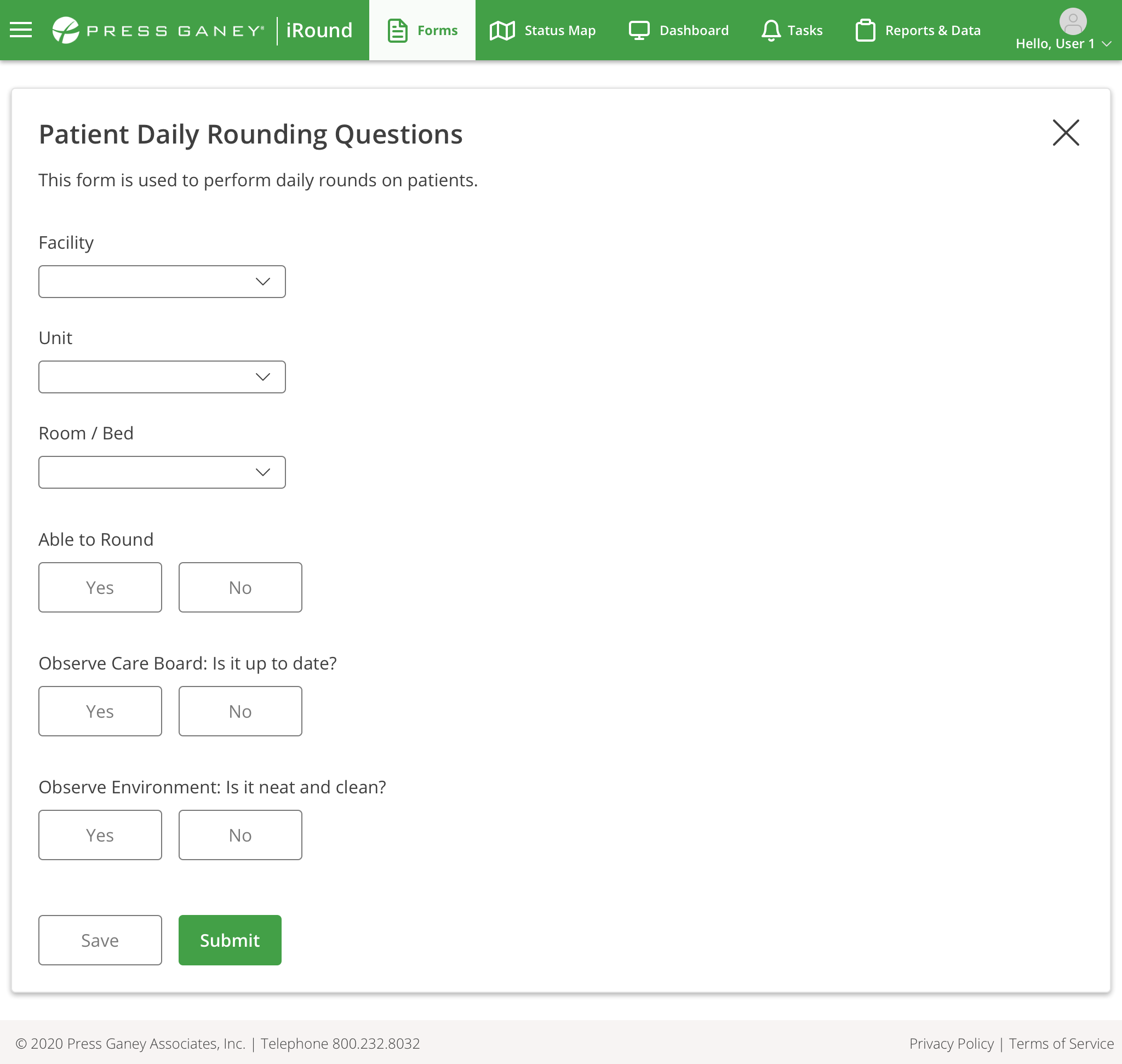
Increased form legibility by adding greater contrast to button borders, rounded corners, condensed and changed order of CTA buttons.
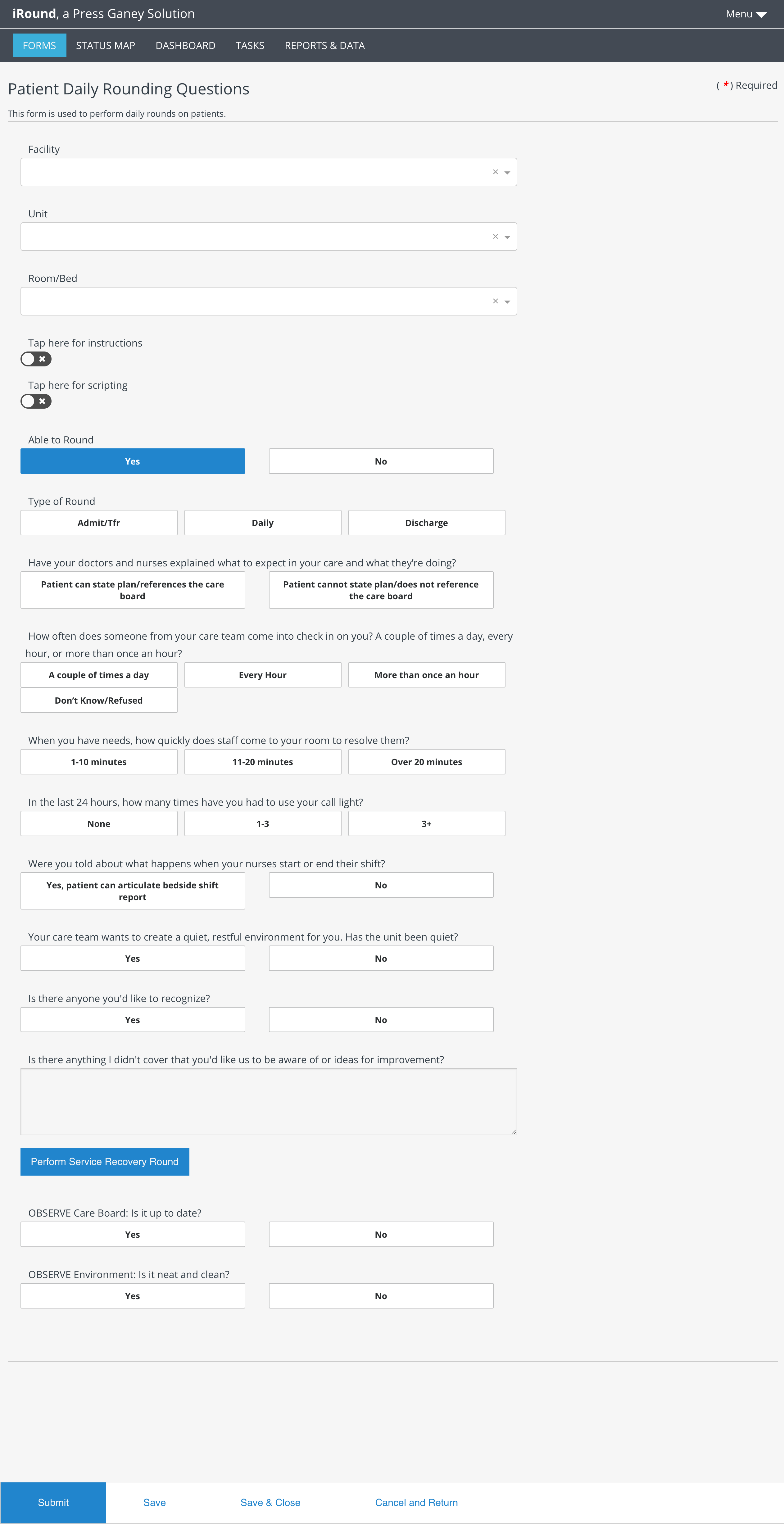
Lots to improve on in this screen, the Yes selected state if users are able to round. The patient rounding form is lengthy and visually hard to parse, which adds difficulty to users trying to quickly round on multiple patients in a day
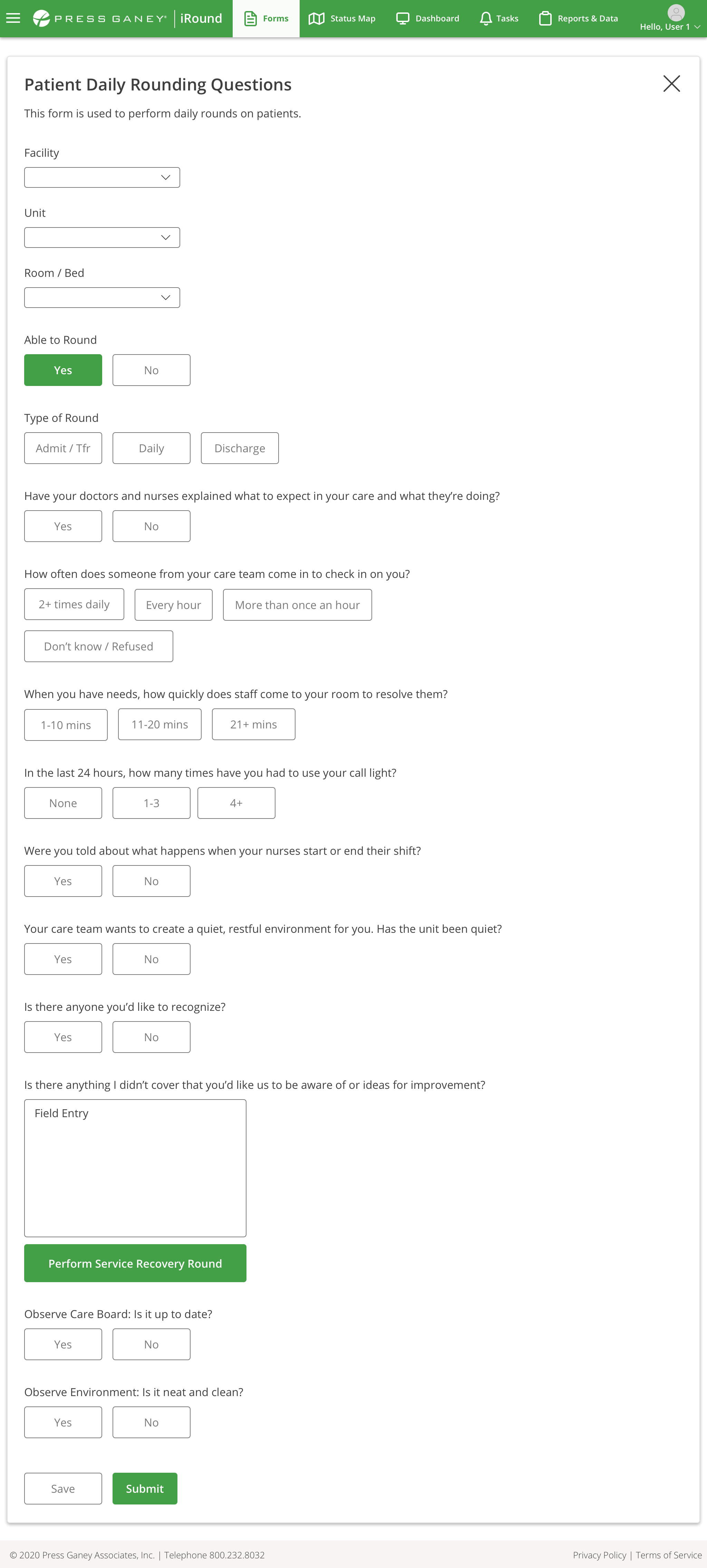
Several improvements here, most importantly copy condensing and updating (use of call light should be mutually exclusive numbers (previously none, 1-3, 3+; versus none, 1-3, 4+)). This allowed for buttons to look more uniform, speeding up the visual parsing process.
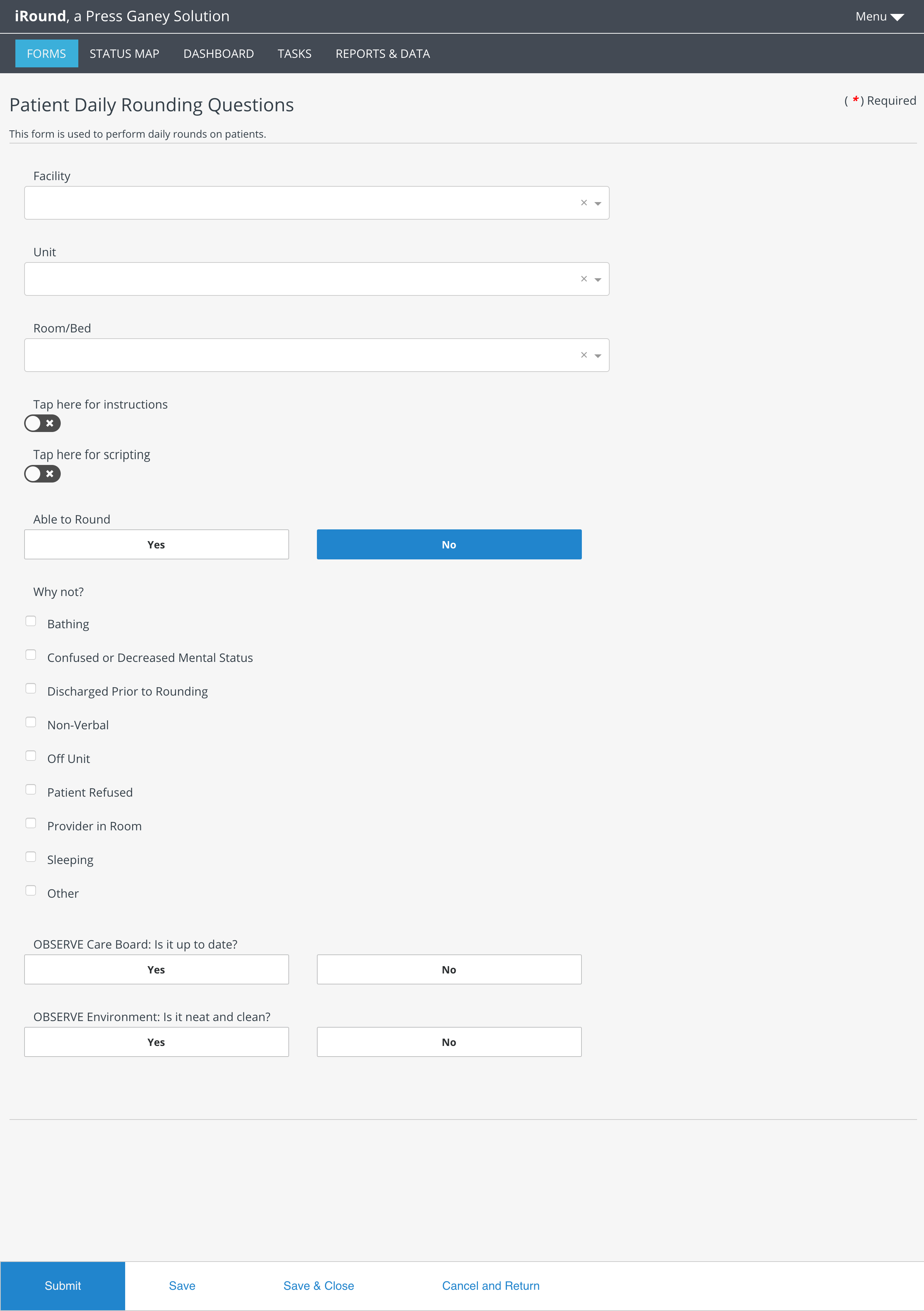
The No, unable to round selected state
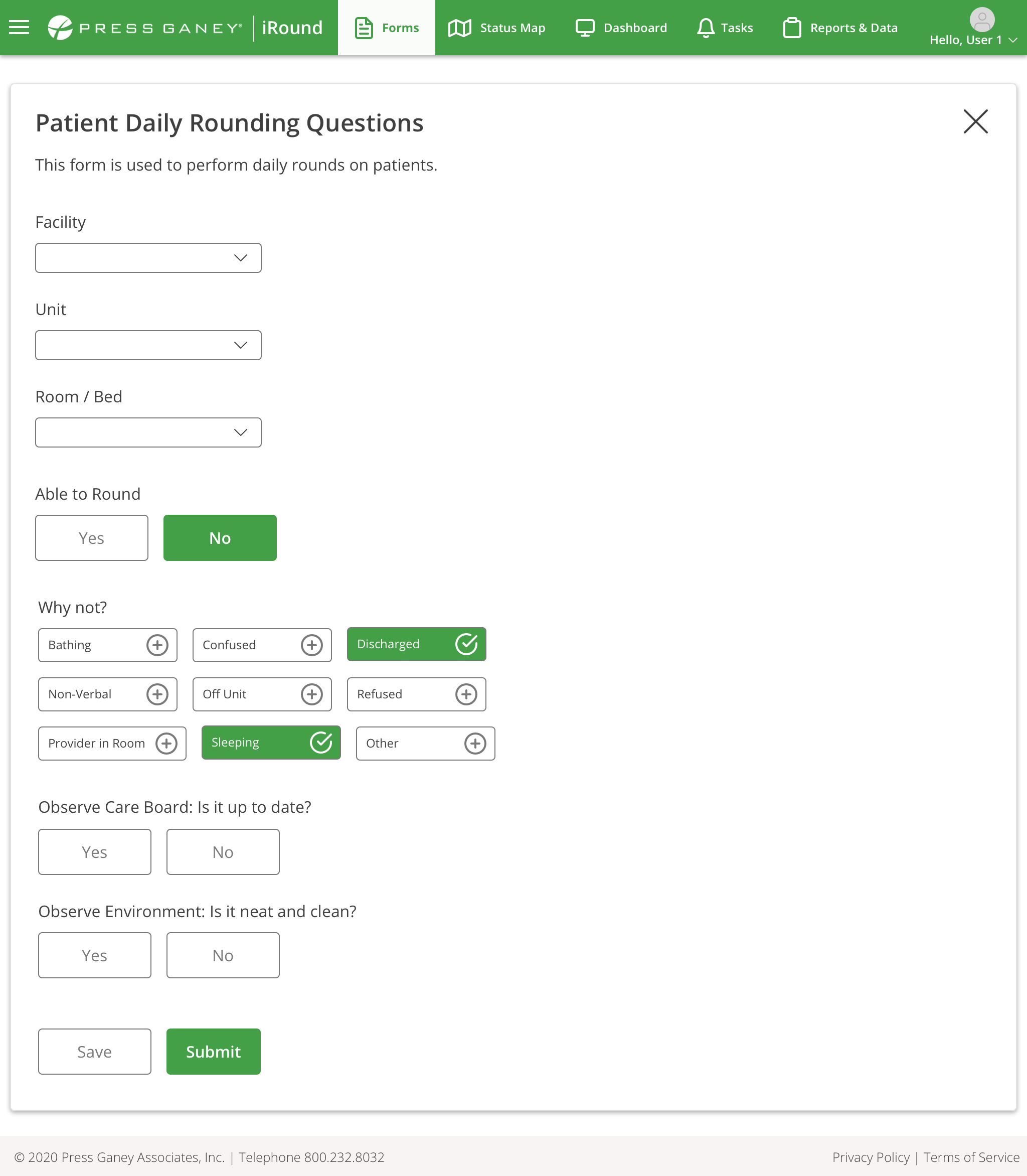
The main improvement here again condenses the visual hierarchy of the screen by moving the checkmark selectors to housing more than one field in a row.
Status Map + Logs
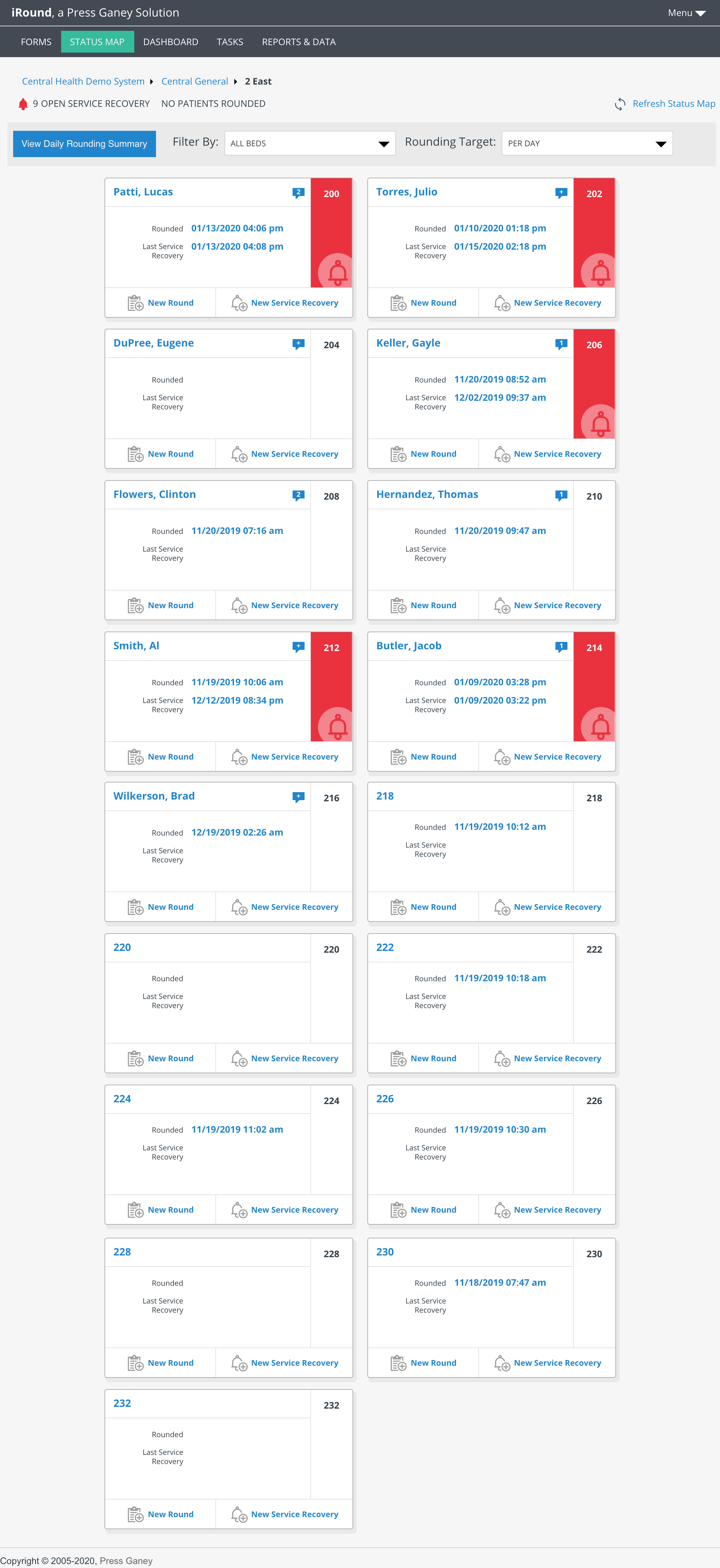
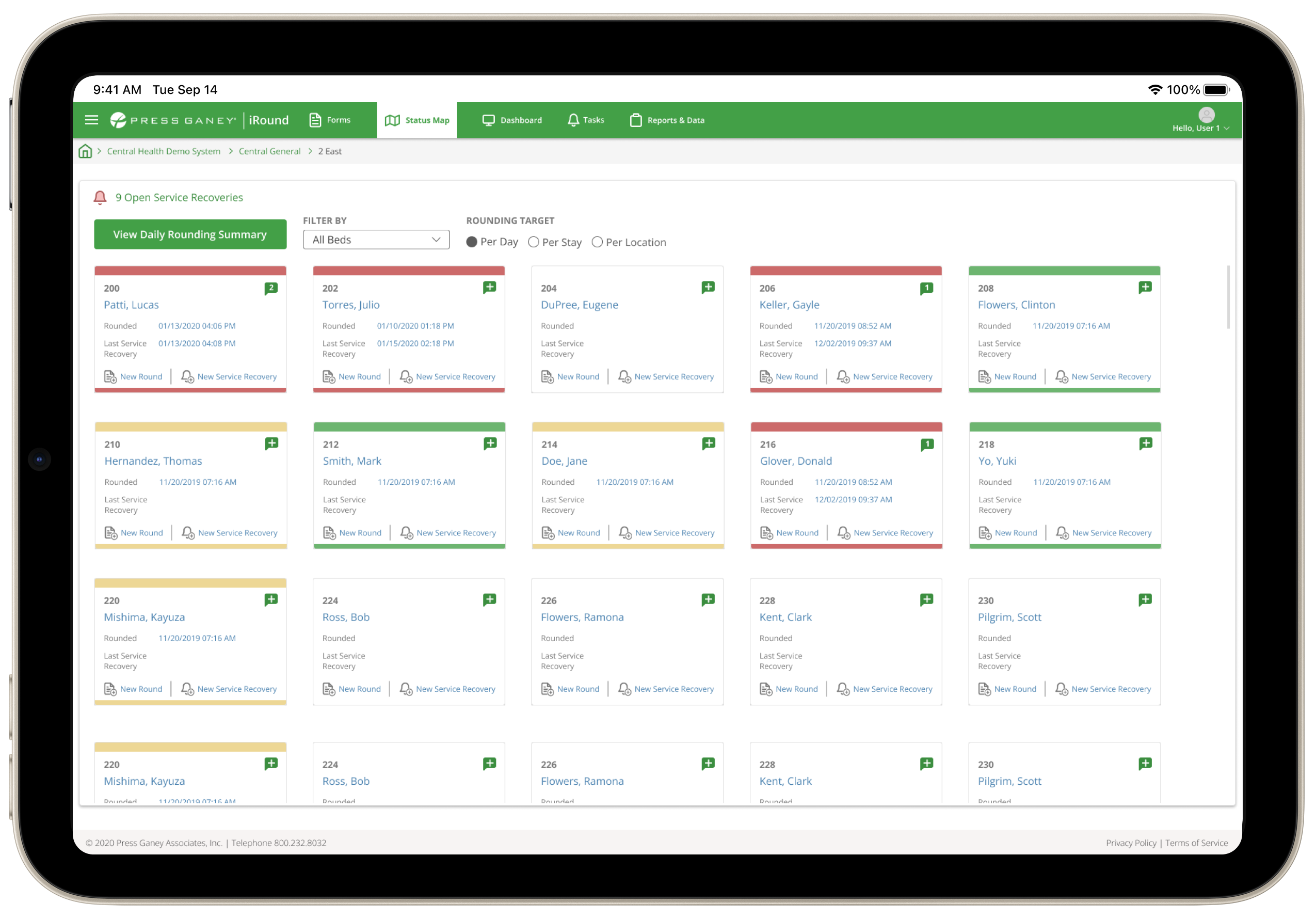
The Status Map breaks down hospital units by hospital and wing to give a detailed view of a patient’s stay. It also houses rounds on empty rooms / beds.
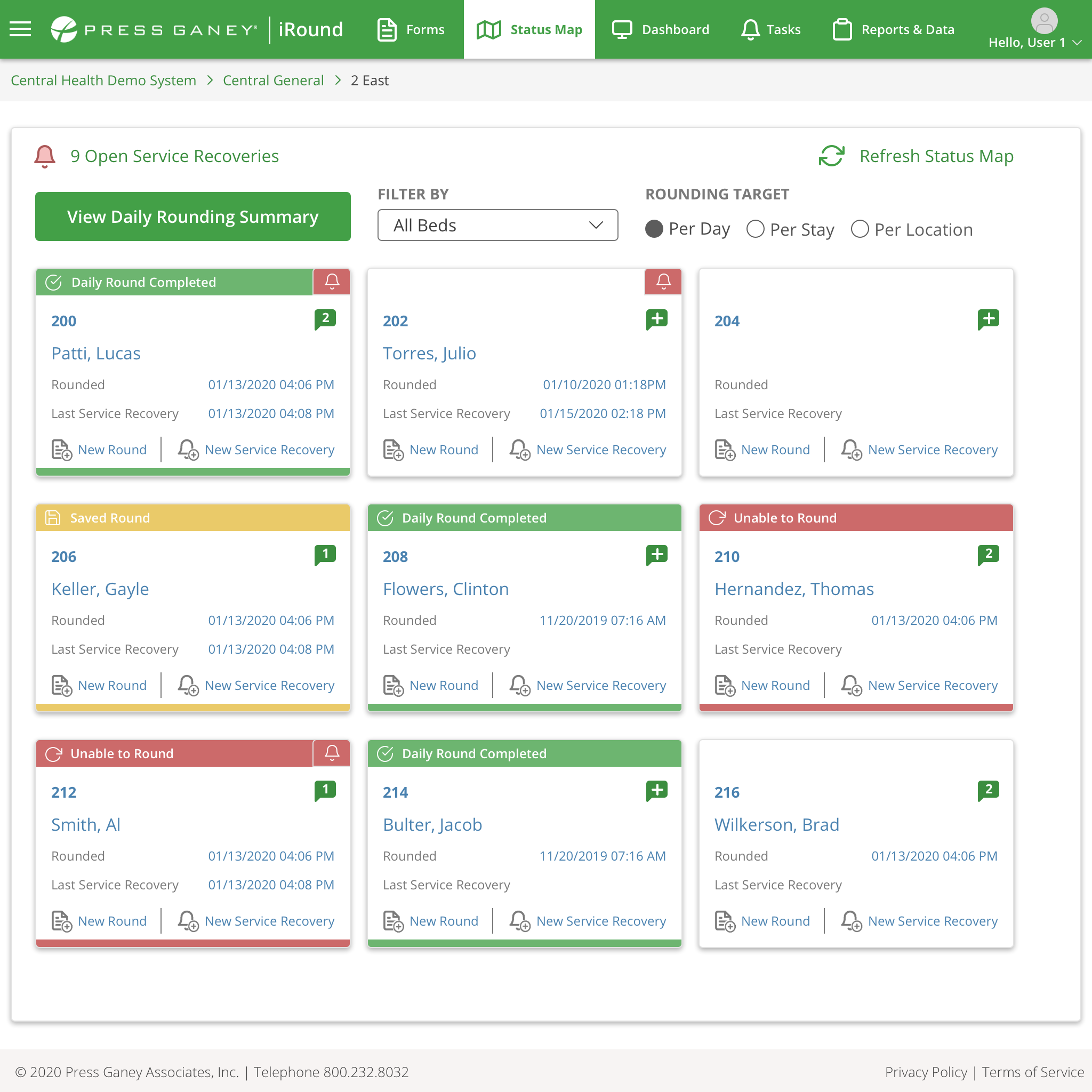
Many of the iterations and updates to the experience of using iRound stemmed from saving screen space. The notifications can be condensed into the top bar of each card, the Rounding Target was three selectors in a dropdown in the original iteration, which I changed to radio buttons, and the card stacks fit more onto each row.
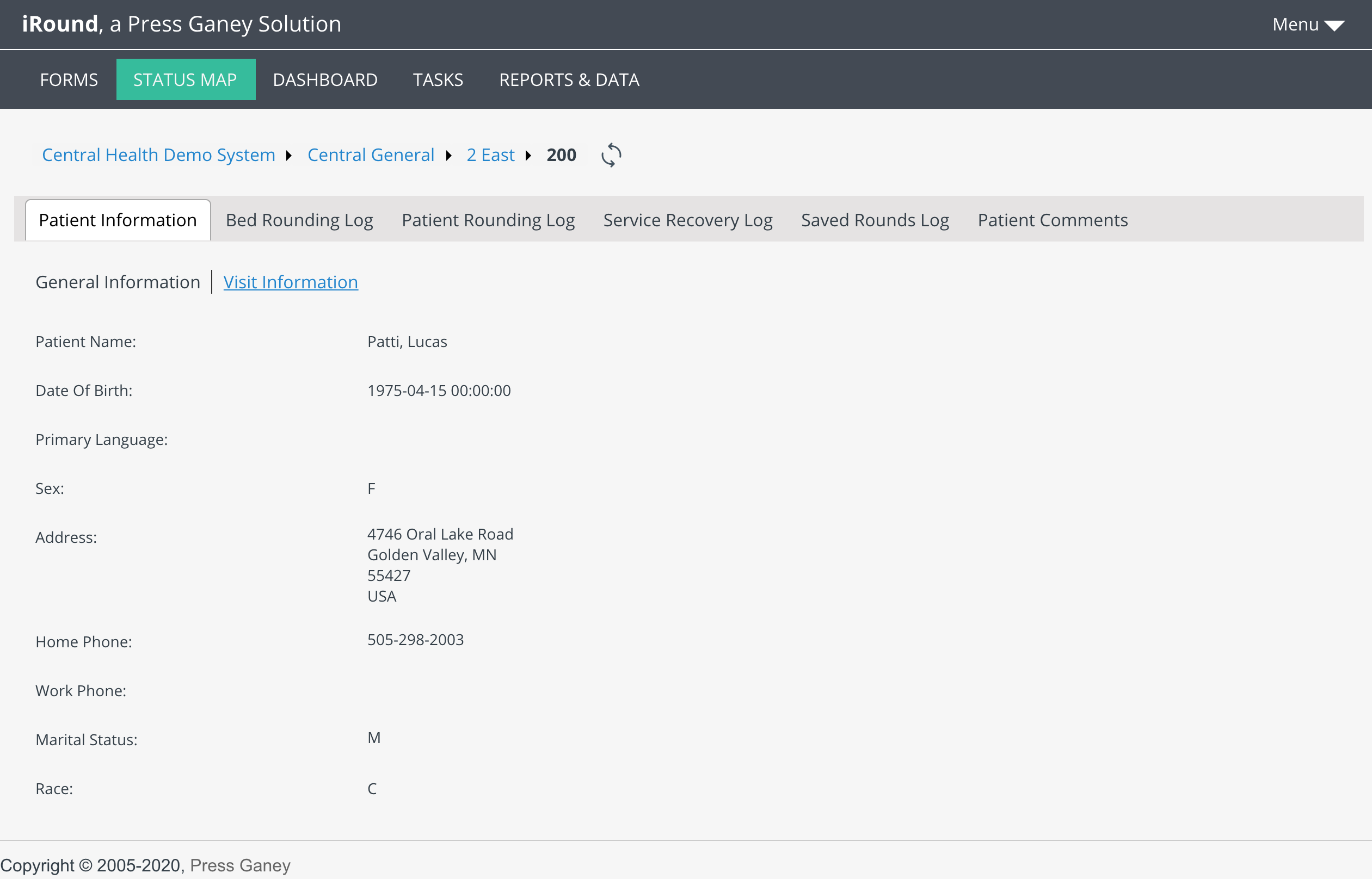
The patient information screen is separated by two tabs, General Information and Visit Information.
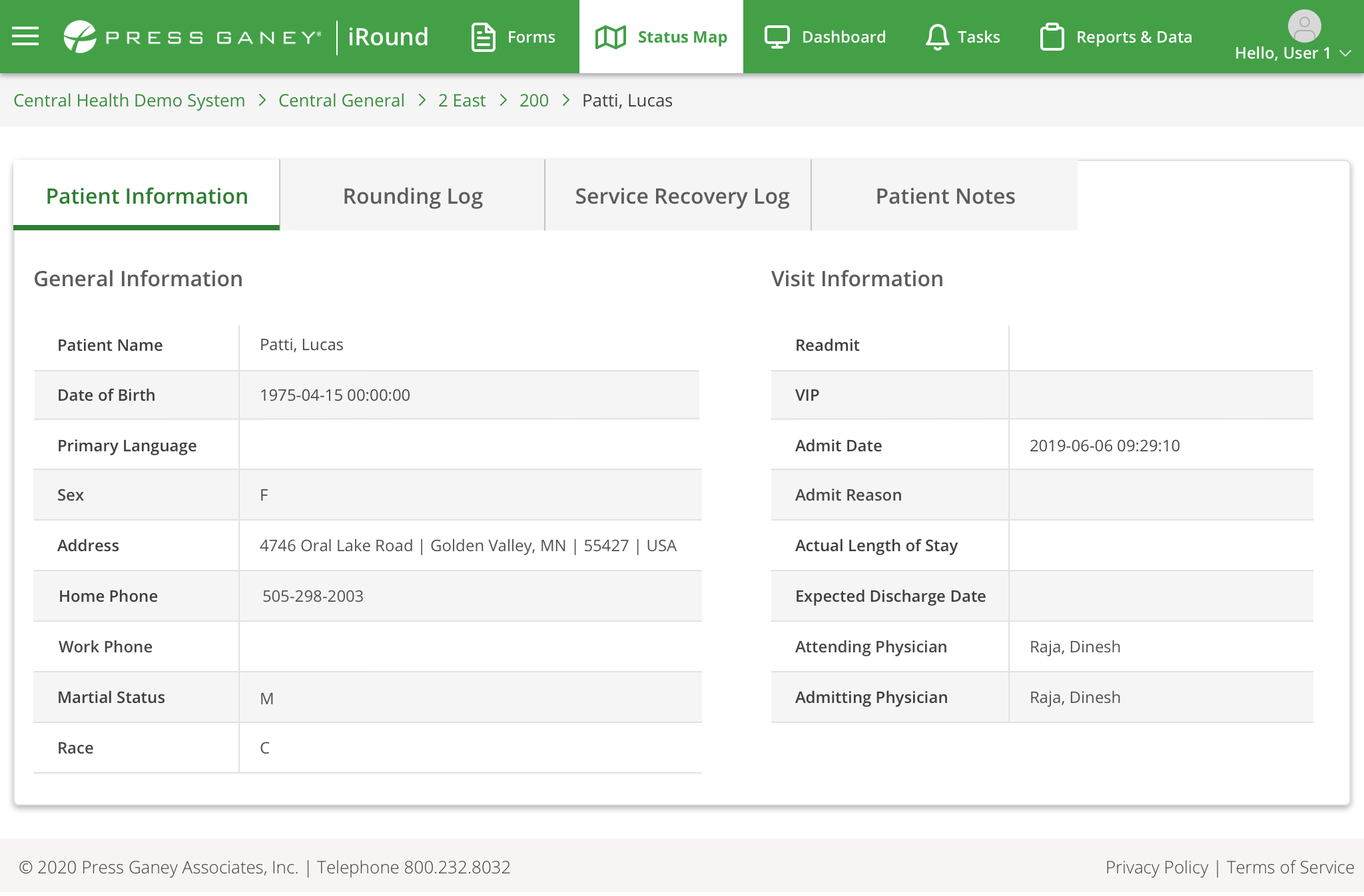
Because both tabs house similar table-like information, I was able to fit both onto the page. I also restructured the information hierarchy, changing the tab link structure to four tabs, down from six.
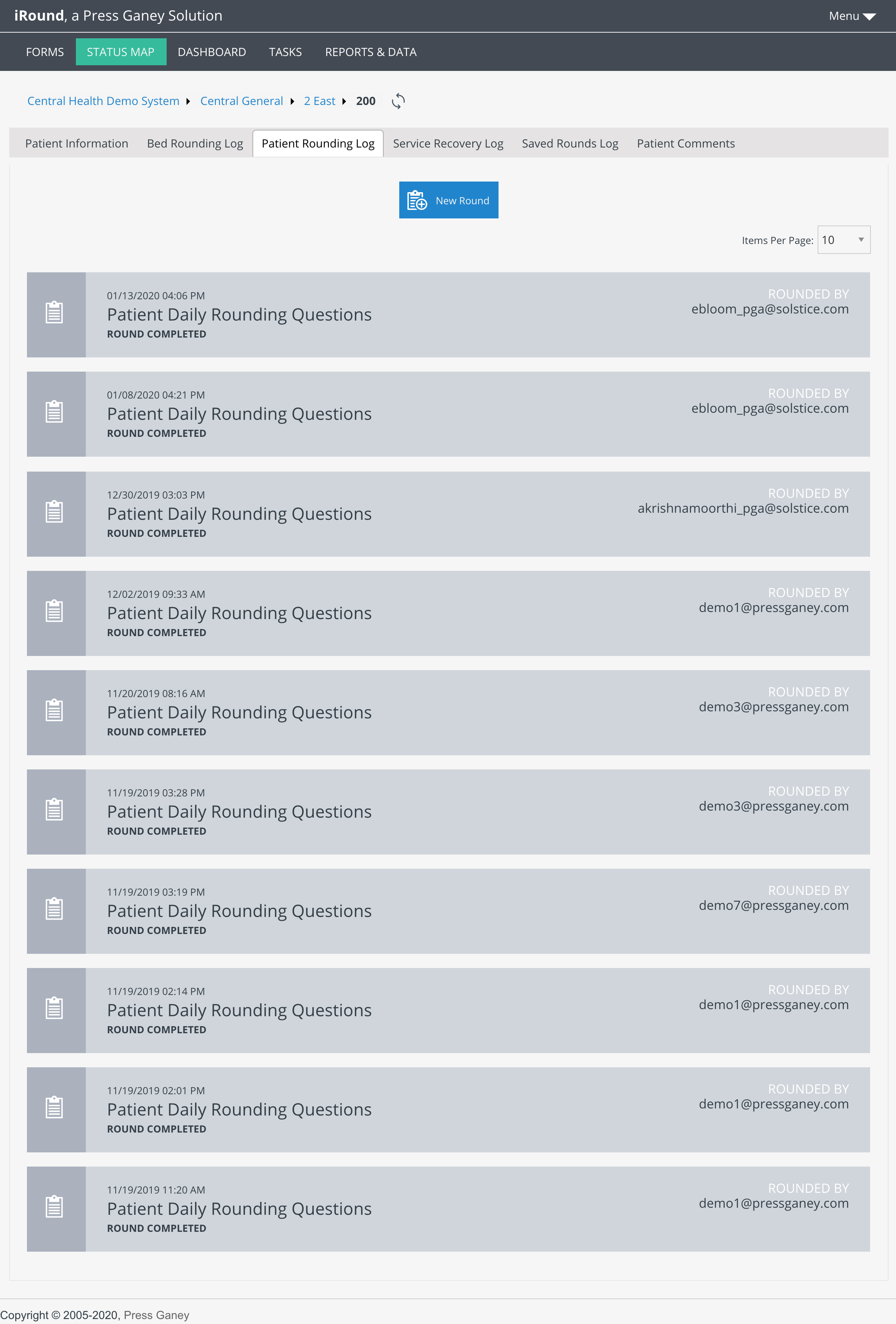
The log of previously completed rounds
2x.png)
I moved to a horizontally scrolling structure to view saved rounds, patient rounds, and bed rounds in the same screen, with the option to view all of one section via a link.
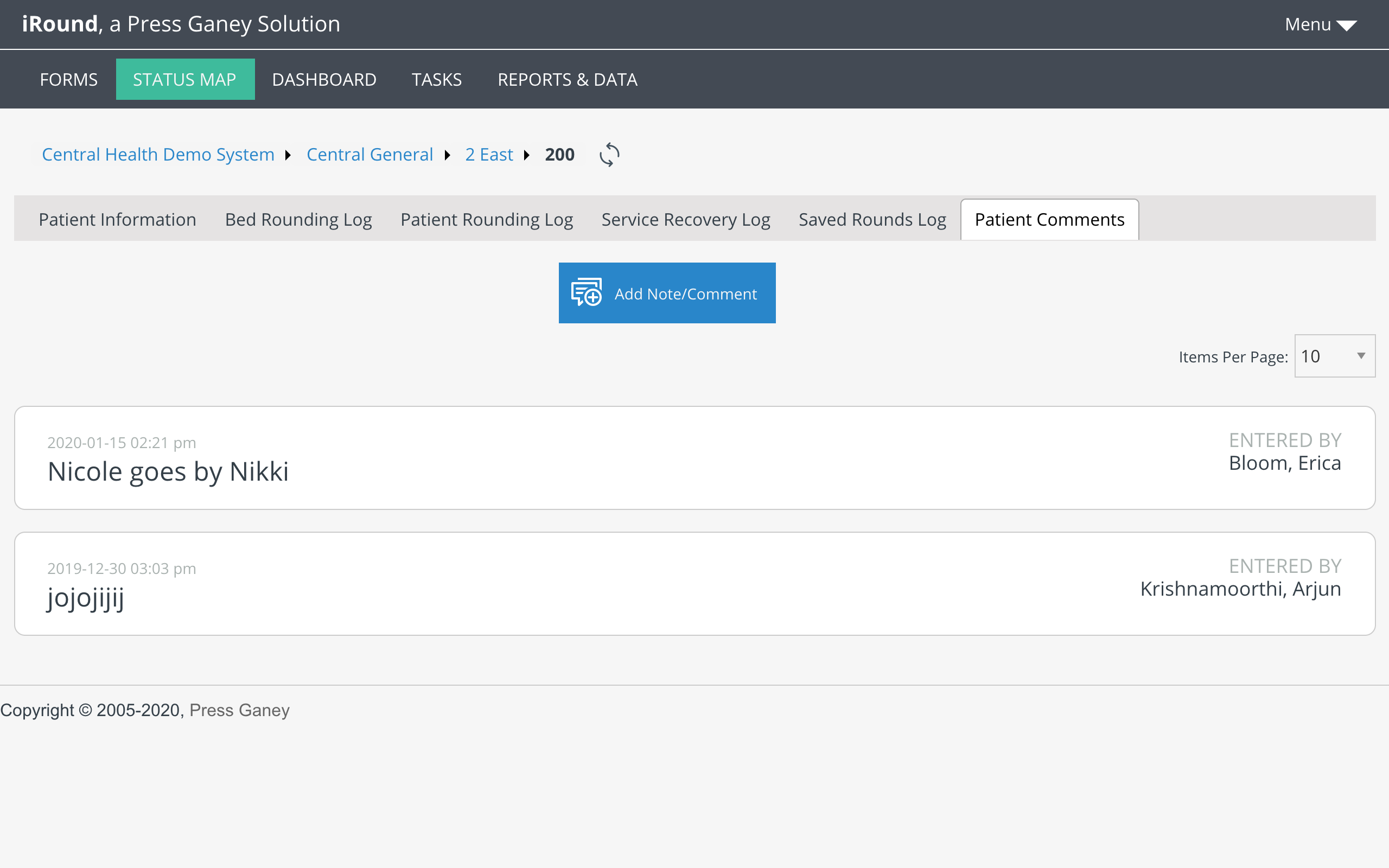
The header here was unclear whether these were comments patients had about the round or if these were comments entered by rounders.
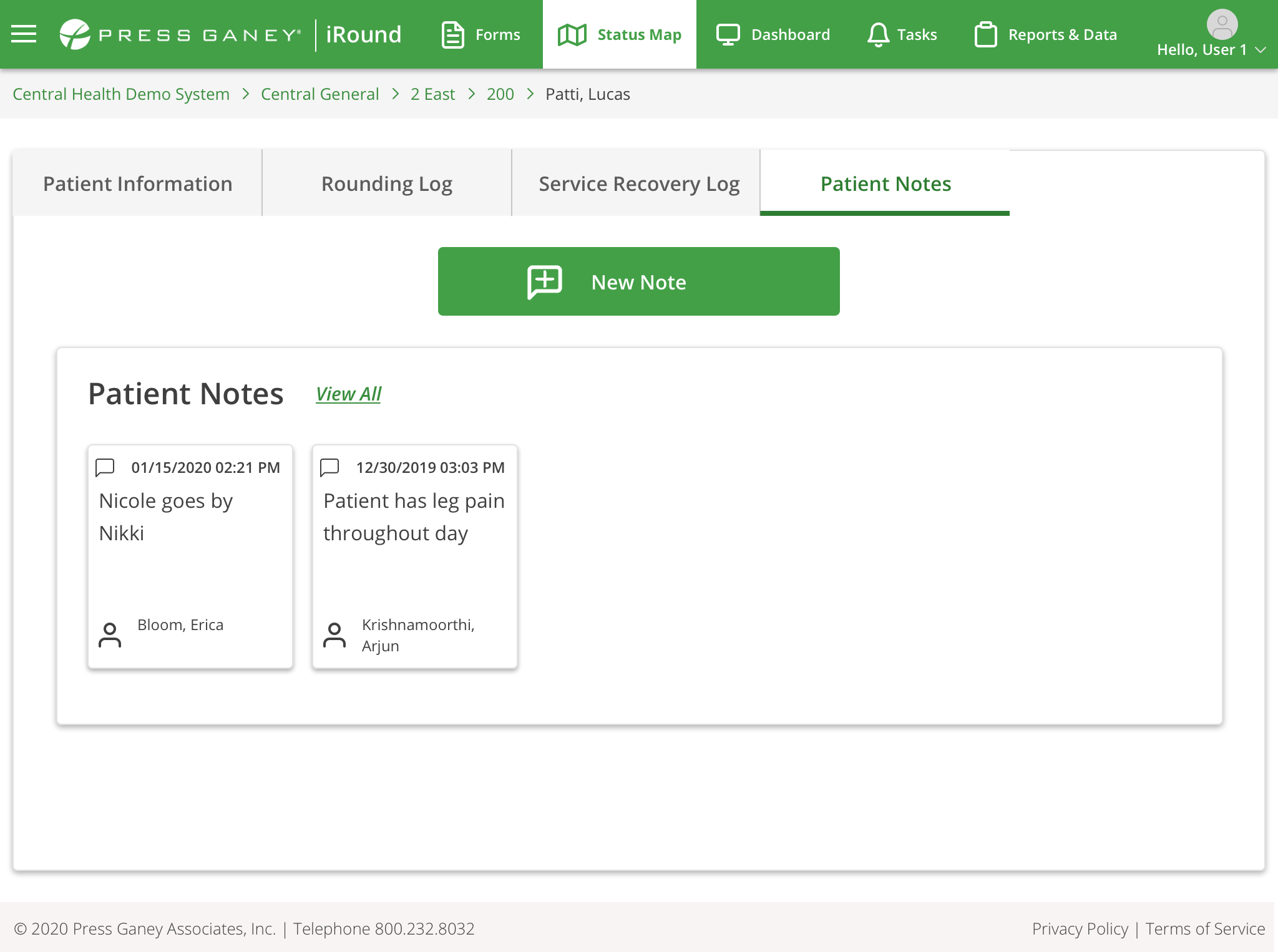
I changed the tab to read “Patient Notes”, which provides a clearer
Rounding Dashboard
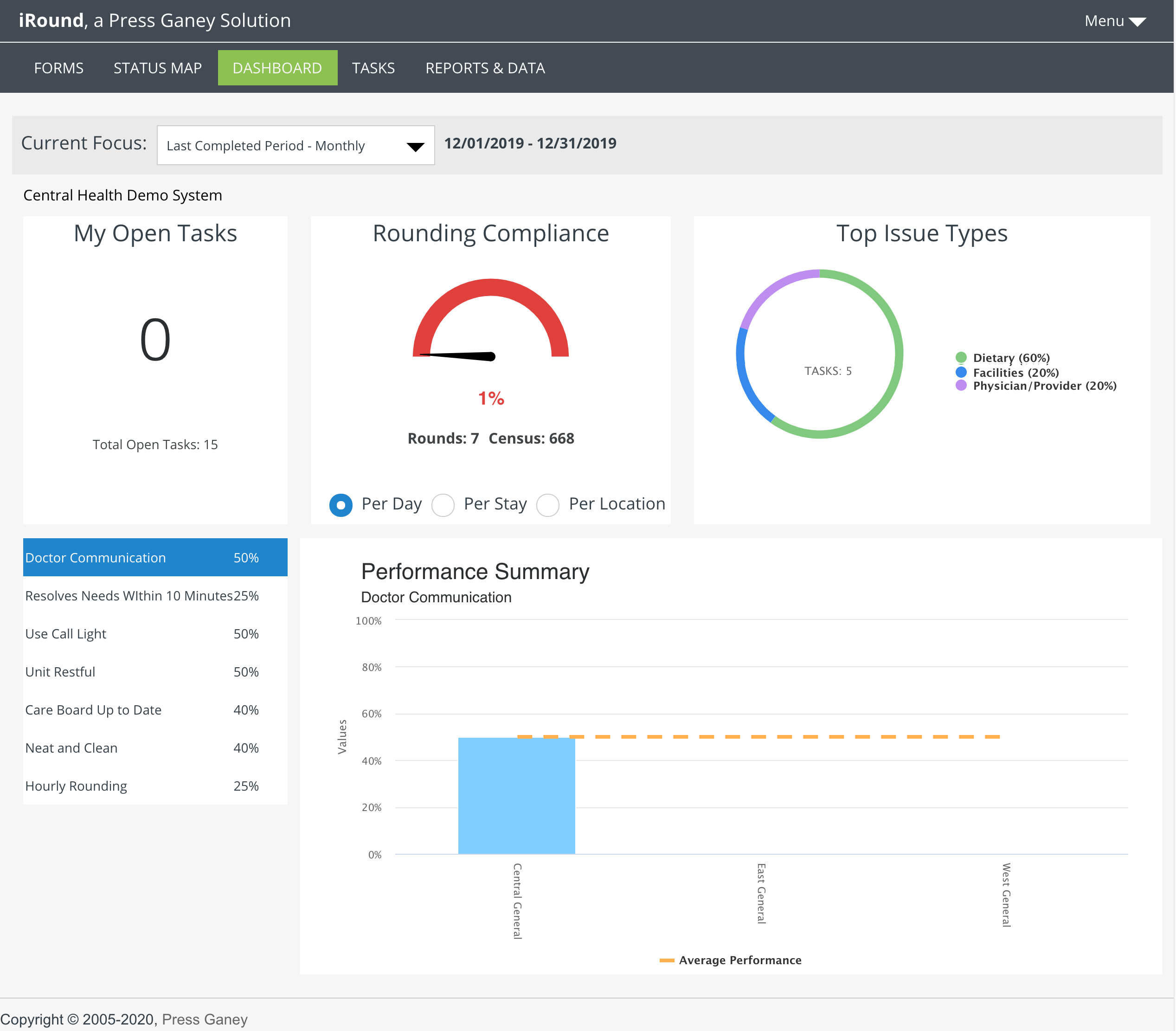
The dashboard visualization aims to show the current performance of a given hospital.
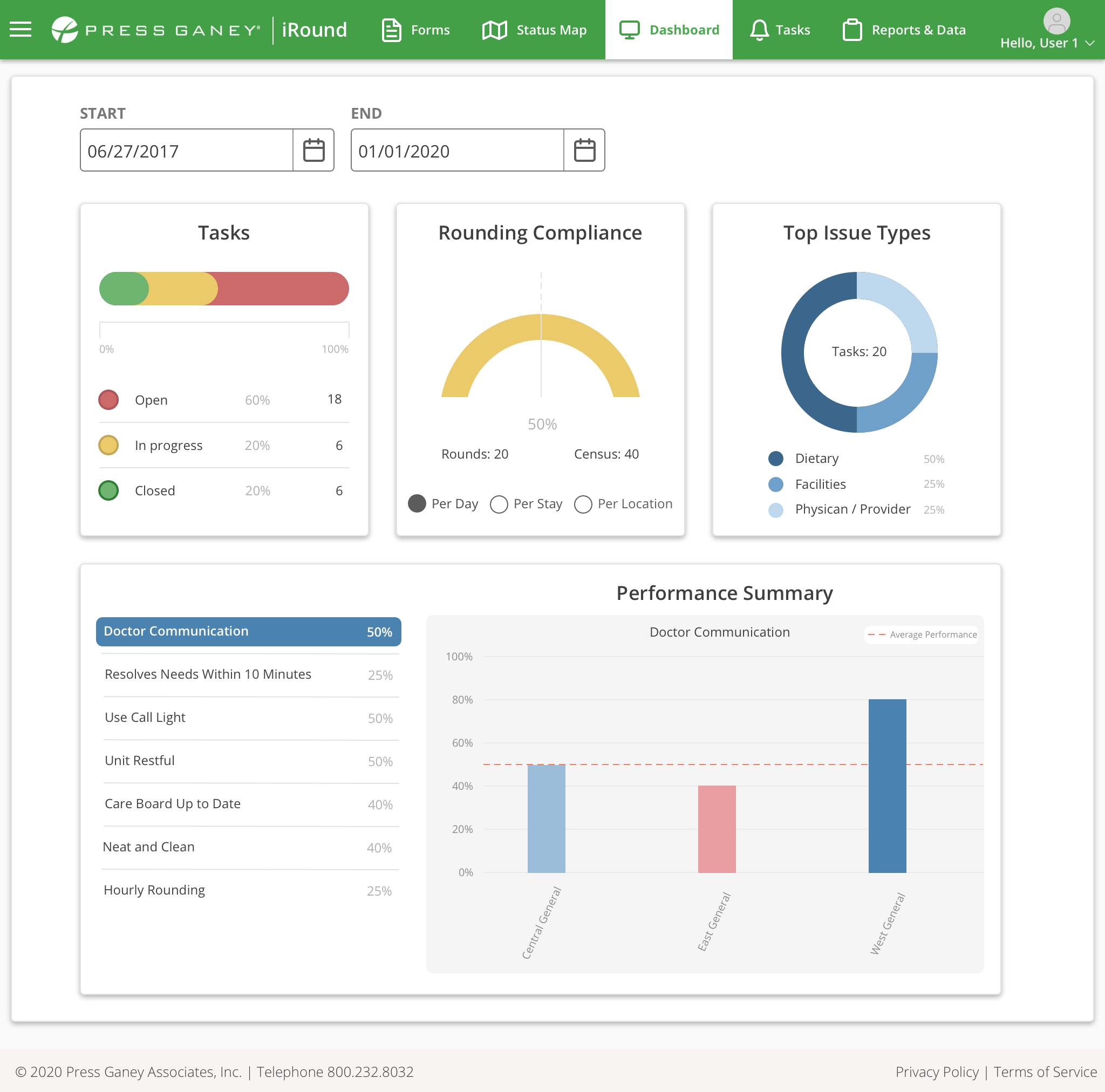
Visually it was unclear that the container that starts with “Doctor Communication” actually houses variables that change the Performance Summary chart. Additionally, I changed the calendar selector to add an affordance of choosing the date range specifically.
Task View
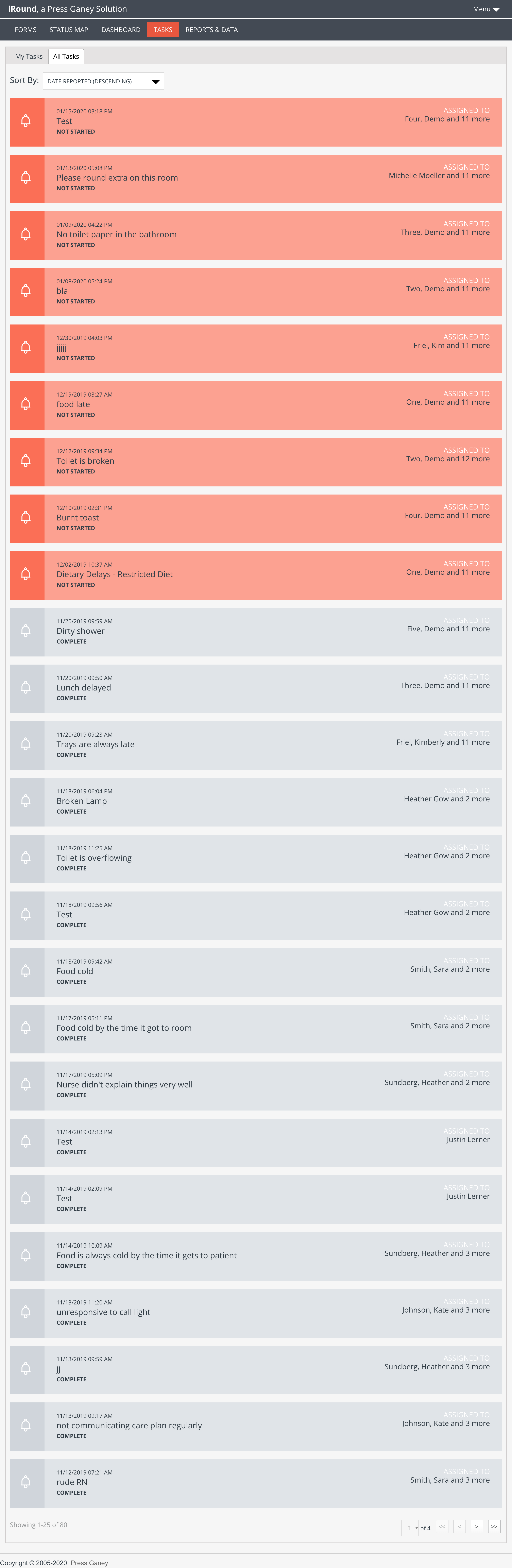
Tasks are assigned to specific nurses or other facility workers. The default view shows all tasks by date reported.
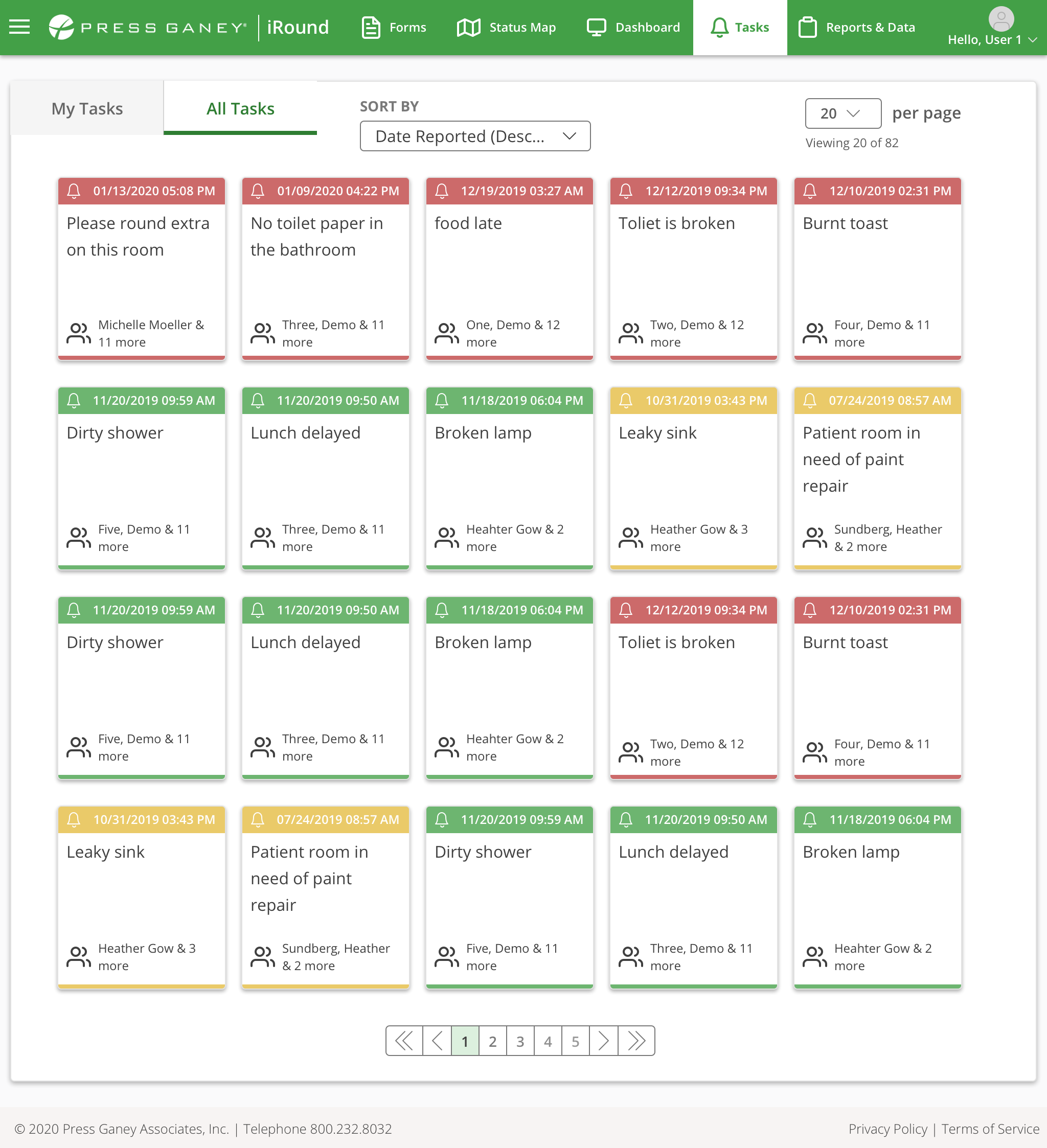
Updated task list view to see many more tasks at once on the page, as well as new color-coding based on status.
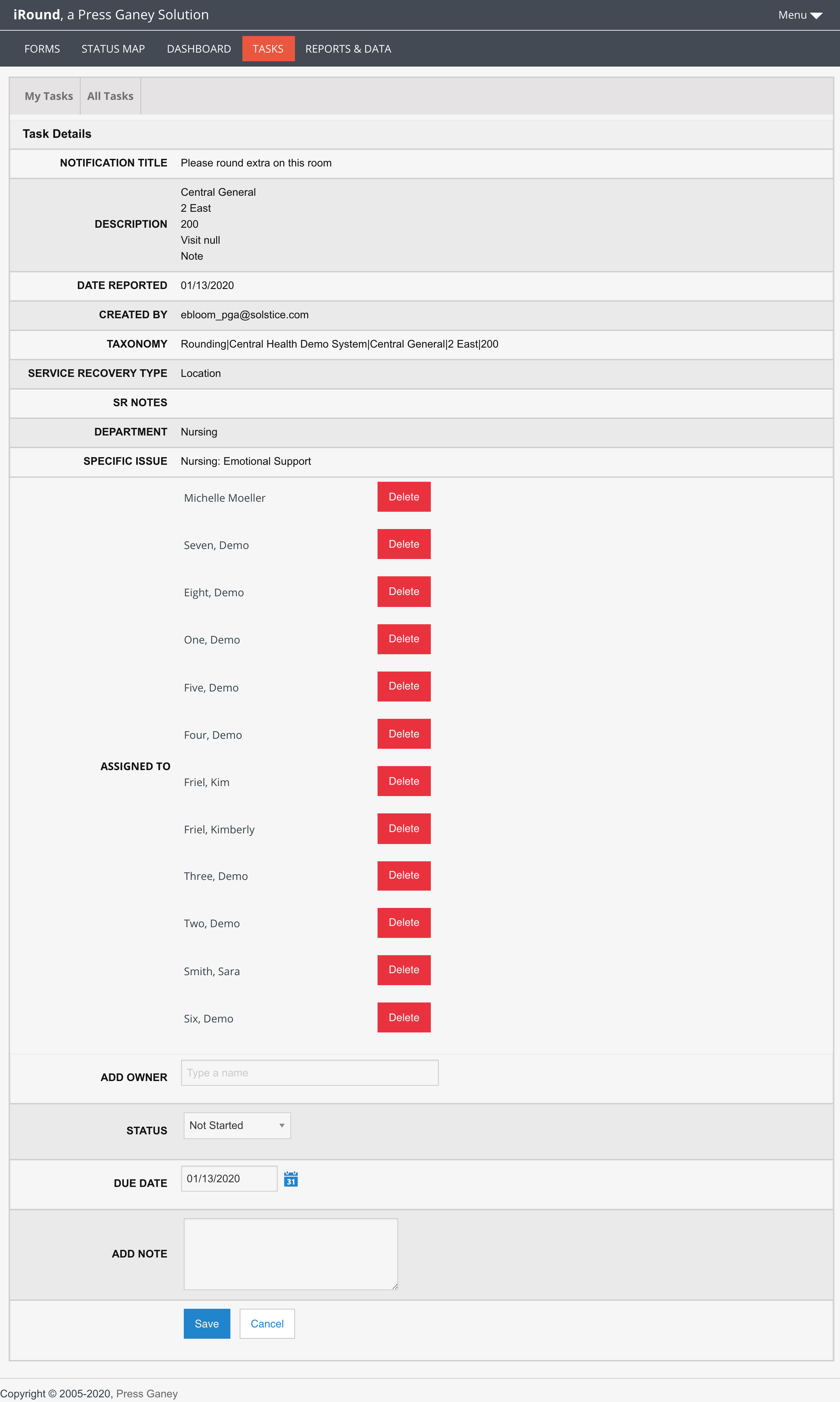
Detailed task view with all relevant fields. Notice how long the Assigned To row gets in this UI.
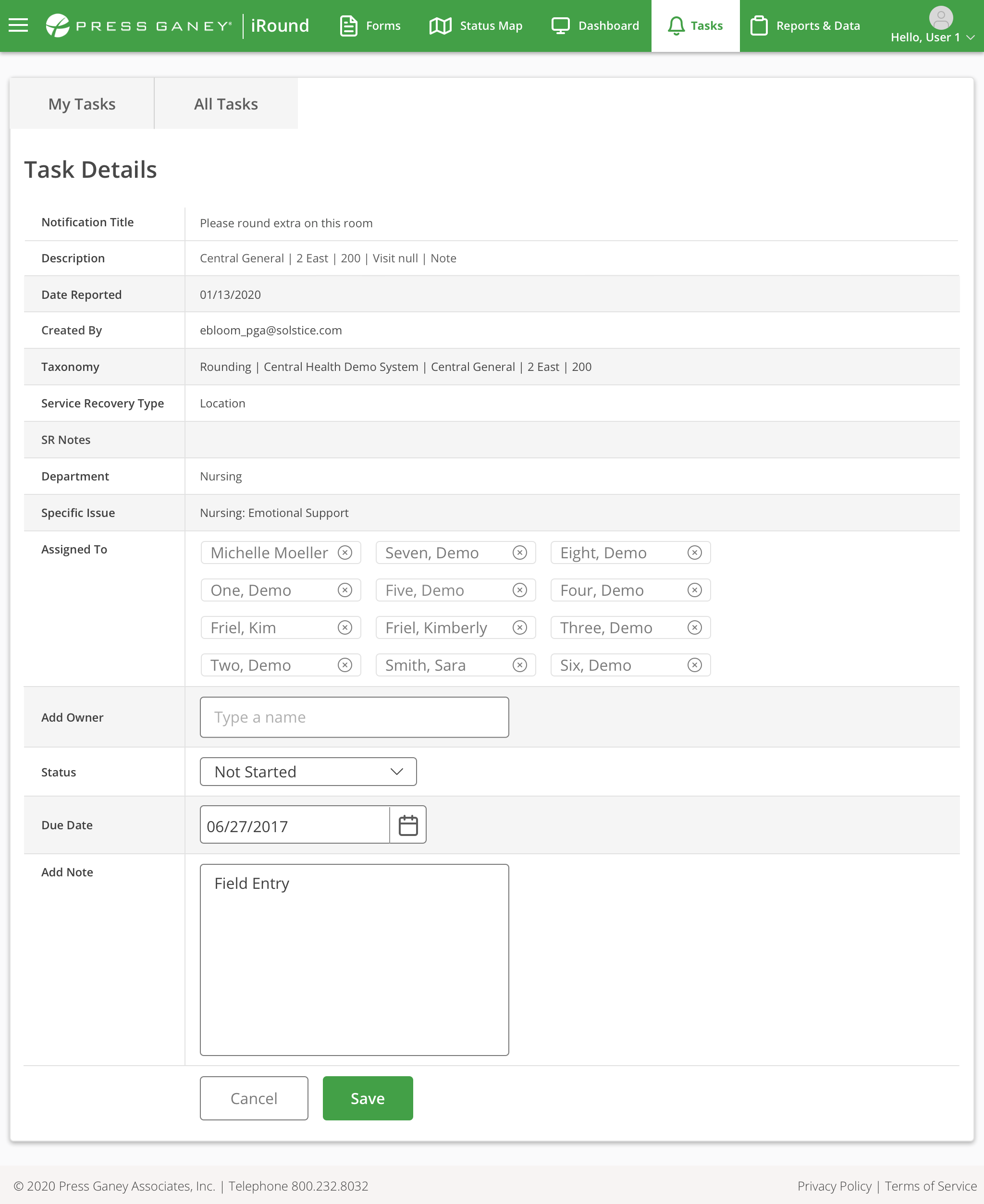
Created a new UI pattern to suggest to Press Ganey's design system: multi-select checkmarks with an icon. Saved significant screen space with this iteration.
Full Research
Working closely with the UX Researchers on the team and leveraging the stakeholders and users Press Ganey could put us in contact with, we collectively completed 17 stakeholder interviews (of which I conducted 2 and participated in 12), one on-site contextual inquiry with 5 participants, and 12 user interviews (of which I participated in 8), for a total of 34 research participants. The research schedule and access was greatly influenced by the time of year (the winter holidays and New Years affecting the availability of participants), and those having available time in the demanding work culture of healthcare.
![[NEEDS REVIEW] Customer journey map for the Patient Rounding Application project (could not preview image to confirm exact content)](https://cdn.prod.website-files.com/6422638f3a9a322ac607f3a8/642b9a4a95612b5e1c87bf30_Customer%20Journey%20Map.jpg)
This Customer Journey Map breaks down the flow and process of using the iRound application across the actor profiles.
![[NEEDS REVIEW] Detailed service blueprint for the Patient Rounding Application project (could not preview image to confirm exact content)](https://cdn.prod.website-files.com/6422638f3a9a322ac607f3a8/642c191a36f34d3226ba8f49_Detailed%20Service%20Blueprint.jpg)
This Service Blueprint attempts to continue to detail our understanding of the full process of point-of-sale to adoption to use of iRound and the steps an organization must take to start using iRound. There were several technical implementation requirements and trainings before use of iRound can start. There were several friction points different client stakeholders called out, particularly that the taxonomy of each hospital must be set in advance for Implementation Specialists to build out the database and data fed into iRound. That process takes sometimes as long as three months. Unfortunately, some of these difficulties were not something we could solve for in the time of the project.
![[NEEDS REVIEW] Flowchart comparing the old and new Patient Rounding process (could not preview image to confirm exact content)](https://cdn.prod.website-files.com/6422638f3a9a322ac607f3a8/642c19725764a38463f027fd_Old%20%2B%20New%20Flowchart%20(1).jpg)
Because there was an intensive rework of the existing UI and flow, I visualized the differences for reference for continued team understanding. The left represents the previous flow, and the right represents the new flow. Although at a glance it may look like there are more steps in the flow, the information architecture actually condenses significantly with some of the updates as many of the screens and tabs were able to be shown on one screen.
Key Insights
![[NEEDS REVIEW] Affinity diagram of research findings for the Patient Rounding Application project (file too large to preview)](https://cdn.prod.website-files.com/6422638f3a9a322ac607f3a8/642b9ea99bd04892cd4fd185_affinity_diagram_smol.gif)
Affinity Diagram Timelapse
We used affinity diagramming to consolidate the results from our stakeholder and user interviews. Overall, we categorized our findings into three main themes, Motivations, Data, and Rounding Environment. Each one of these played a significant role in the overall experience of using iRound. Ultimately, we also prioritized designing and solving some of these key issues but started first with updating the look and feel and information architecture of the application. If we had more time or more statements of work signed, we could have addressed more of these issues.
![[NEEDS REVIEW] Key research insights summary for the Patient Rounding Application project (could not preview image to confirm exact content)](https://cdn.prod.website-files.com/6422638f3a9a322ac607f3a8/642c18cea0d871093c5f6f13_Key%20Insights.jpg)
Reflection
We worked diligently to meet client needs, but often level setting with the client on what was possible given tight timelines proved difficult. We had to quickly dissect and prioritize needs, many of which were unknowns because there was previously no user research done on the application itself. Similarly, I initially felt lost on where to start because there were many competing priorities from the stakeholder interviews, which we conducted before the user interviews. Ultimately, reworking the interface to update some flows, organization of links, and visual design proved to be the first step towards modernizing the application. Although Press Ganey didn’t end up signing a second statement of work (COVID intervened), we had a clear direction on the future feature improvements we wanted to integrate which we presented at the final readout.
![[NEEDS REVIEW] Likely a Patient Rounding Application research photo based on file grouping (could not preview image)](https://cdn.prod.website-files.com/6422638f3a9a322ac607f3a8/642b9b0776462819d3f89463_Image%20from%20iOS.jpg)
Presenting updated iRound UI
![[NEEDS REVIEW] Likely a Patient Rounding Application research photo based on file grouping (could not preview image)](https://cdn.prod.website-files.com/6422638f3a9a322ac607f3a8/642b9ba77646286d7af89d57_IMG_1488.jpg)
Team pic